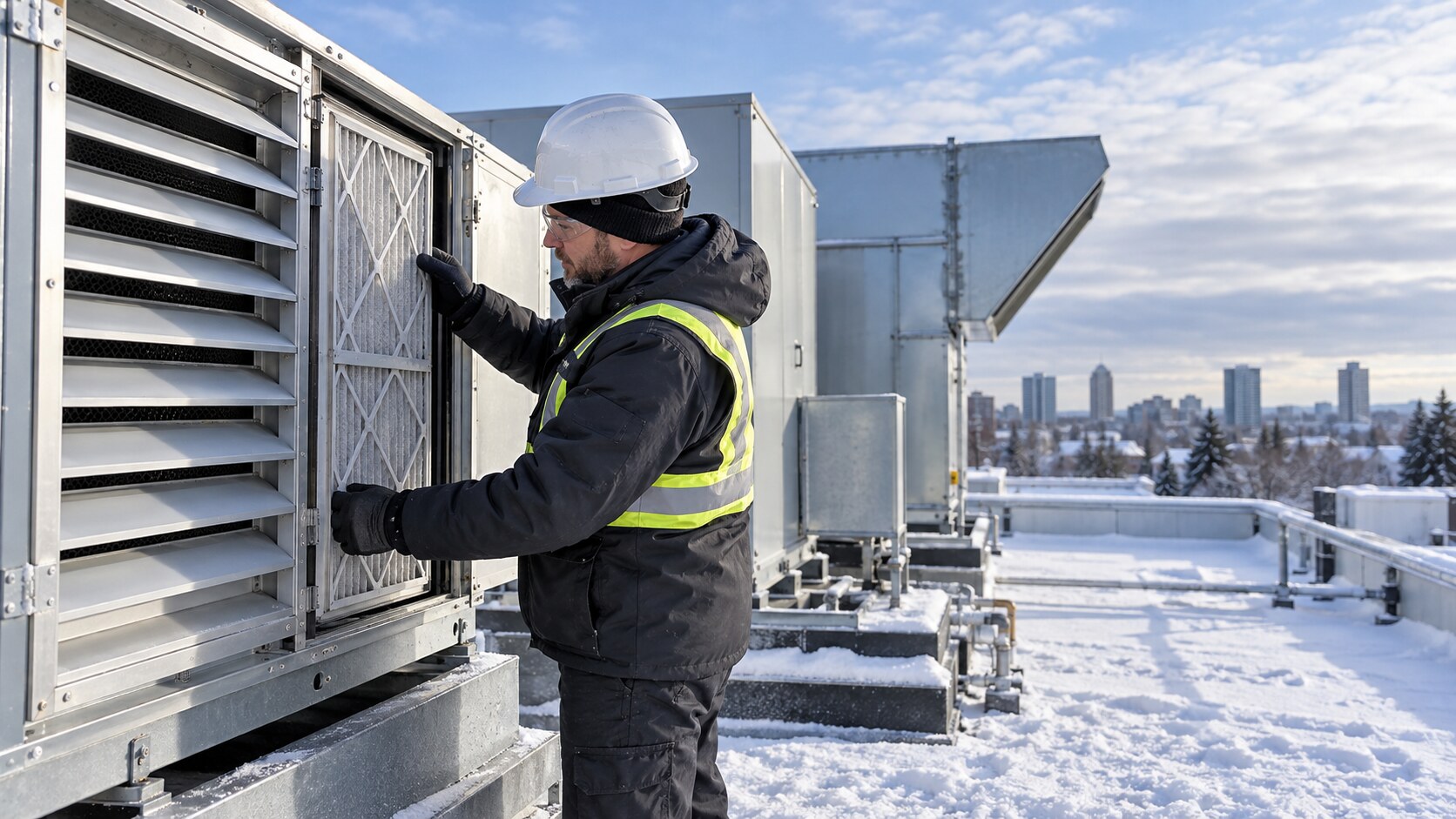
Winter brings longer heating schedules, changing outdoor conditions and tighter maintenance windows. Before the coldest weeks arrive, a structured air filtration inspection can help commercial facilities identify loaded filters, damaged seals and airflow issues.
Why winter readiness starts at the filter bank
Cold weather does not automatically make filters dirty faster. Actual loading depends on outdoor conditions, internal activities, ventilation rates and operating time. However, seasonal changes give building teams an opportunity to verify that the filters and air-handling system are ready for heating-season operation.
For northern U.S. and Canadian buildings, snow, windblown debris, moisture and nearby road activity can be relevant to outdoor intake maintenance. Avoid relying on a generic fall replacement rule without inspecting the system.
1. Inspect and document every filtration stage
Check pre-filters, intermediate filters and any final-stage filters according to the site's maintenance procedure. Look for torn media, warped frames, damaged pockets, wet filters, poorly seated cartridges and bypass gaps. Record differential-pressure readings and compare them with relevant filter specifications.
Identify filters that need replacement now versus those that only require ongoing monitoring. Keep the stages separate in the maintenance log.
2. Check outdoor air intakes and nearby drainage
Inspect louvers, bird screens, intake compartments and drains for leaves, debris and evidence of water entry. Accumulated snow or blocked intakes can affect air delivery. Moisture around filter banks deserves prompt investigation to prevent damage and maintain designed performance.
Any work on rooftop or elevated equipment should follow site safety procedures and be carried out by qualified personnel.
3. Confirm airflow and equipment operation
Review unusual fan noise, changes in supply airflow and comfort complaints. Compare readings under similar operating conditions and check whether the building automation system flags high pressure drop or sensor faults. Filters are one possible cause of excessive resistance; coils, dampers and other equipment also need consideration.
4. Plan inventory before weather disruptions
Confirm actual dimensions, model numbers, required efficiencies and quantities for each air handler. A staging list can help avoid rushed substitutions when temperatures drop or access becomes limited.
When replenishing stock, evaluate pleated pre-filters, bag filters and V-bank filters against existing equipment specifications.
5. Use a repeatable winter checklist
Pre-winter filtration checklist
- □ Verify all filter stages and rack labels
- □ Record differential-pressure readings
- □ Inspect media, gaskets, clips and bypass points
- □ Check outdoor intake screens and drainage
- □ Investigate moisture, ice or unusual debris
- □ Confirm current stock of approved replacement sizes
- □ Review fan alarms and airflow trends
- □ Assign follow-up inspections and document corrective actions
Keep monitoring after the first cold snap
Seasonal preparation is a starting point, not a one-time event. Conditions may change after a storm, nearby construction, extended operating hours or unusual outdoor air-quality events. Increase inspection frequency if the evidence calls for it. Use our commercial filter replacement guide to connect inspection findings with replacement decisions.
Frequently asked questions
Should all commercial HVAC filters be replaced before winter?
No. Replace filters based on condition, applicable final resistance limits and the system's maintenance procedure—not the season alone.
Can outdoor snow and moisture affect filters?
Moisture entering the intake or filter bank can damage certain components or media. Investigate water entry and follow the equipment manufacturer's instructions.
How can facilities prepare for supply delays?
Keep an accurate approved-parts list and reorder based on documented usage, lead times and storage capacity.
Plan a commercial filtration solution with AirPurete
Browse AirPurete commercial filters or contact our team to discuss your facility's filter types, sizes, efficiency requirements and operating conditions.