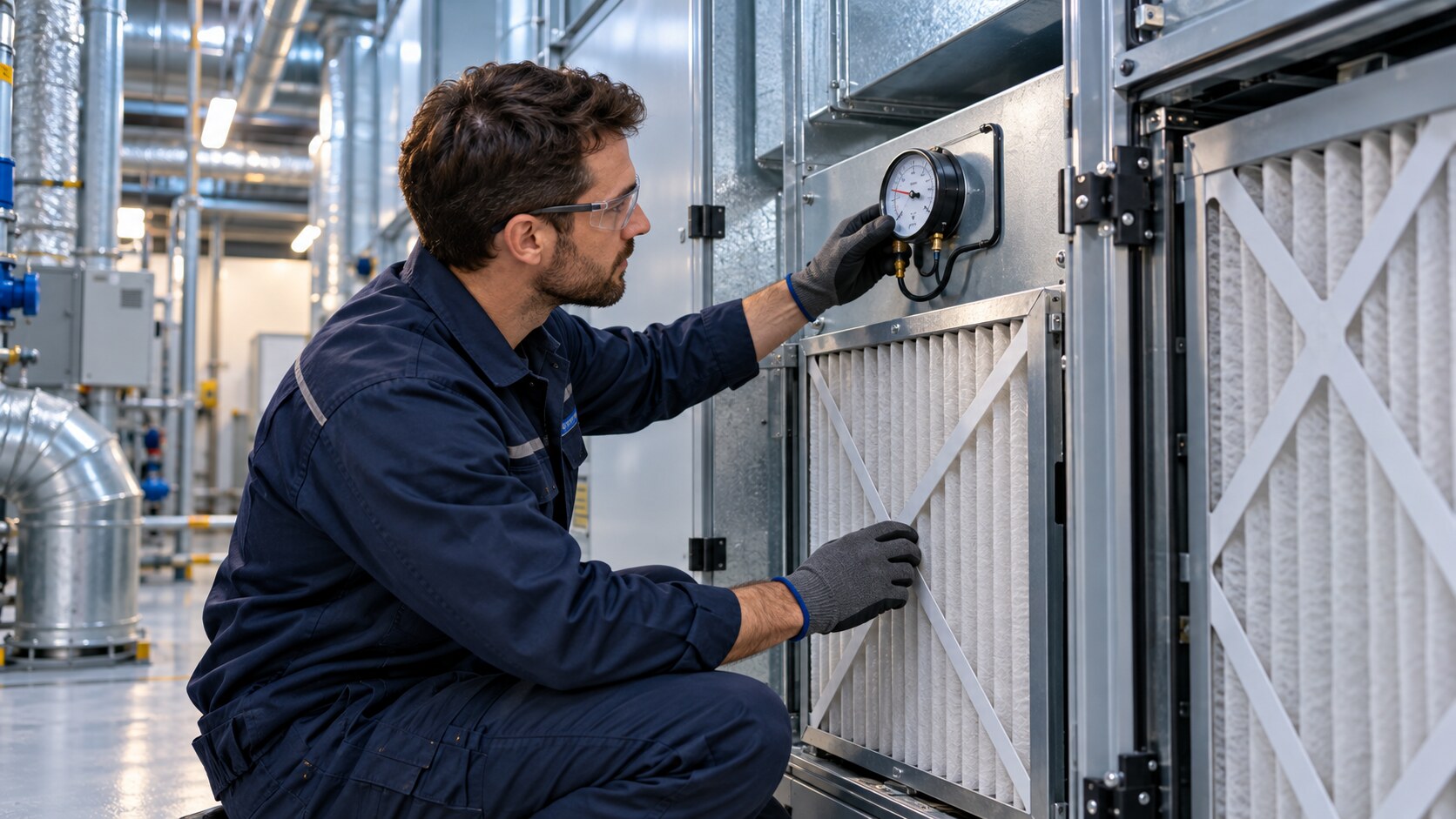
There is no universal replacement interval for every commercial air filter. A dependable maintenance plan combines regular inspections, filter pressure-drop readings, equipment requirements, and the conditions inside and outside the building.
Why there is no one-size-fits-all schedule
Two buildings using the same filter may need very different service intervals. A busy logistics facility with frequent door openings can load filters much faster than a low-occupancy office. Nearby construction, seasonal pollen, road dust, outdoor air rates, and operating hours also influence how quickly media becomes loaded.
Calendar reminders are useful for inspections and inventory planning, but they should not replace the equipment manufacturer's guidance or an evaluation of filter condition.
Monitor pressure drop—not just calendar age
As particulate matter accumulates, resistance across a filter generally increases. A differential-pressure gauge or building automation sensor can help maintenance staff follow this change. Compare the reading with the filter manufacturer's published initial and recommended final resistance at the relevant airflow.
Do not copy a replacement threshold from another facility. Different filter types, fan arrangements and stages have different operating limits. A filter that has reached the applicable final resistance—or is damaged or wet—may need replacement even if its calendar interval has not elapsed.
What to check during a filter inspection
- Pressure: record readings upstream and downstream of each stage where instrumentation is provided.
- Media and frame: look for torn media, collapsed pockets, damaged pleats, moisture and compromised gaskets.
- Fit: check that filters are correctly oriented, seated and sealed without bypass gaps.
- Airflow: investigate unusual airflow reduction, noise or comfort complaints rather than assuming the filter alone is responsible.
- Site conditions: note construction, wildfire smoke, dust events or operational changes.
Different stages need different attention
In multi-stage air handlers, pre-filters capture larger dust before it reaches intermediate or final filters. Consequently, pre-filters can require more frequent changes than downstream bag, V-bank or HEPA filters. Changing every stage automatically on the same date can waste usable capacity; leaving a heavily loaded pre-filter in service can also burden the rest of the system.
See our guide to commercial filtration stages for the roles of each filter category.
Build a practical inspection and replacement plan
Commercial filter maintenance checklist
- Document the filter model, dimensions, efficiency, airflow rating and designated stage.
- Record clean-filter pressure readings after installation.
- Set routine inspection dates appropriate to operating conditions.
- Trend pressure drop and note any visible damage or bypass.
- Replace at the product/equipment limit or sooner if physical condition requires it.
- Log installation date, readings, reason for replacement and the next inspection.
A site with dust spikes may require extra checks between planned inspections. Any pressure change that appears abnormal warrants troubleshooting of sensors, dampers, fan speed and loading conditions.
Consider costs beyond filter purchases
Filter purchasing, maintenance labor, shutdown access, waste handling and fan energy all contribute to total cost. A higher-capacity filter can be worthwhile when it operates within the system's allowed resistance and reduces necessary changeouts. Compare products using verified performance data and your facility's operating conditions—not an assumed number of months.
Frequently asked questions
Can commercial filters be changed every three months?
Three months can be a convenient inspection or replacement planning interval for some applications, but it is not a universal rule. Use the filter's published resistance limits and actual site conditions to determine changes.
Should a filter be replaced if it looks clean?
Appearance alone is unreliable. Small particles can load media without obvious discoloration; review pressure-drop history and applicable service requirements.
Do HEPA filters need pre-filters?
Many HEPA systems use upstream filtration to protect the final stage, subject to the facility's engineered design and procedures.
Plan a commercial filtration solution with AirPurete
Browse commercial pleated filters, bag filters and V-bank filters or contact our team to discuss your facility's filter types, sizes, efficiency requirements and operating conditions.